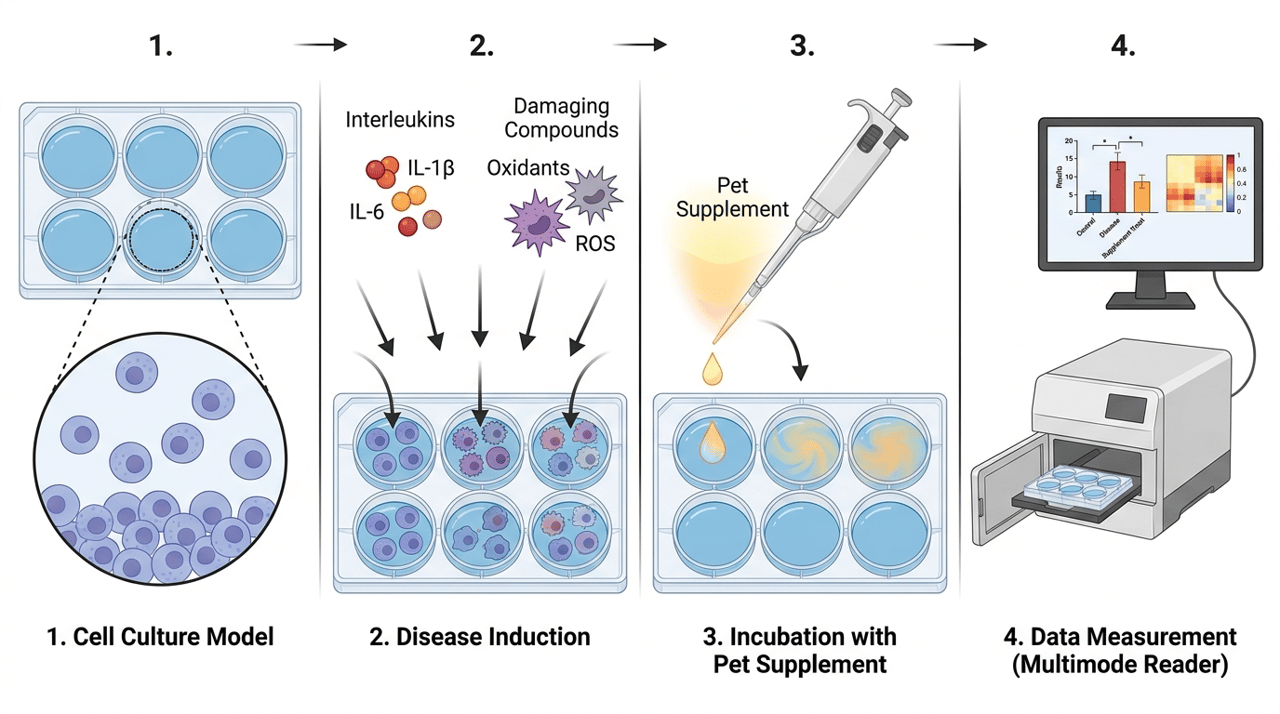
EU: Under EU Regulation (EC) No 767/2009, Article 13(1)(b), health claims on pet food must be backed by scientific evidence — available before the product goes to market, not after a challenge arrives. The FEDIAF Code of Good Labelling Practice confirms that in-house and proprietary data counts. An in-vitro biological study on your finished formulation is valid substantiation under this framework.
UK: The principles of the EU feed regulations were retained in UK domestic law after Brexit. The FSA is responsible for controlling claims and the implementation of safety measures. The substantiation standard is the same: scientific evidence, available on request, before market entry.
US: The FDA, AAFCO model regulations, and FTC truth-in-advertising standard all require the same thing: claims must be truthful and supported by competent scientific evidence. In-vitro biological data on finished formulations is accepted as part of a substantiation package for functional and structure/function claims.